Why You’re Still Tired After 40
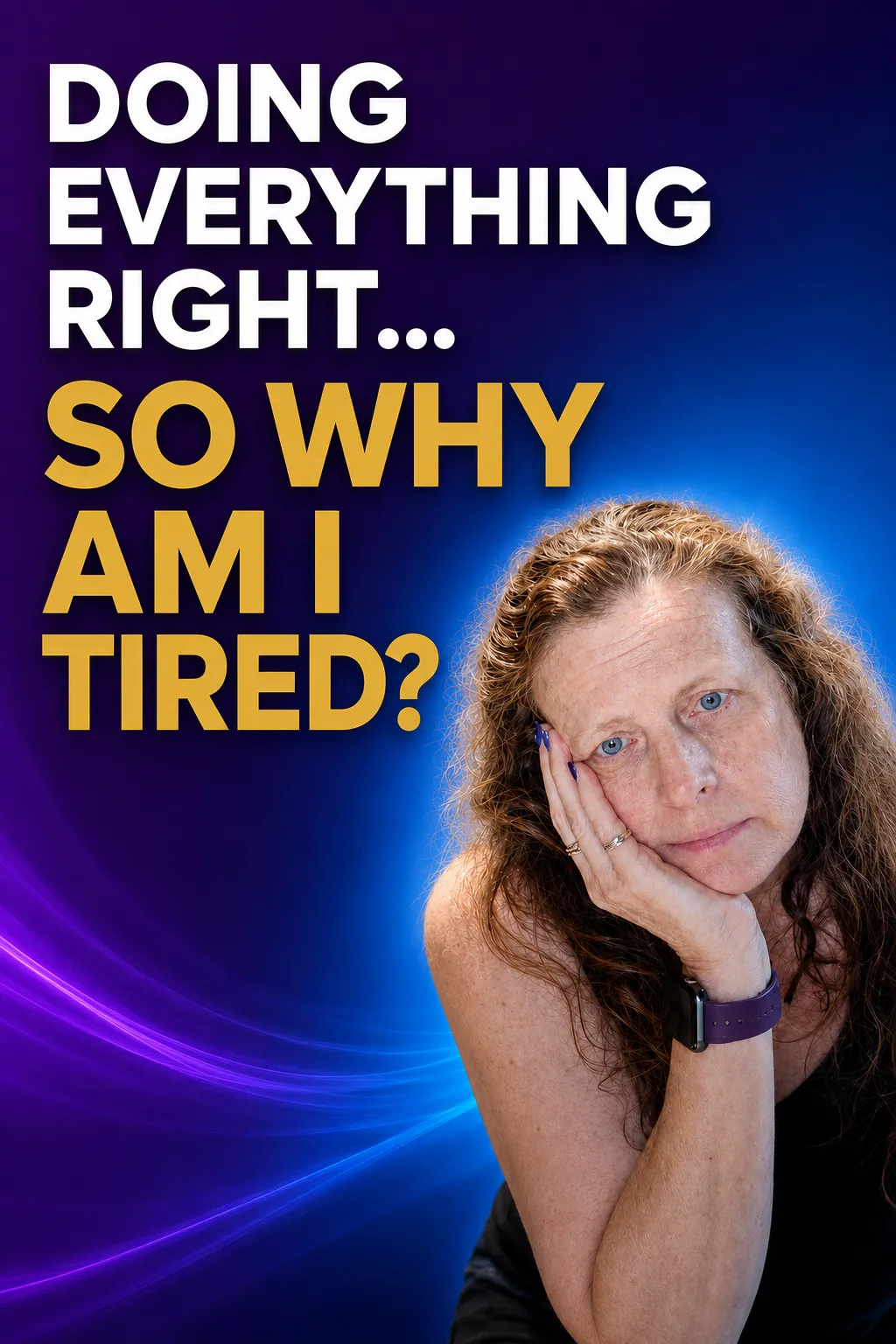
Why You’re Still Tired Even When You’re Doing Everything Right After 40
You’re trying to eat better. You’re making an effort to stay active. You’re taking care of your responsibilities and doing your best to make healthier choices.
So why are you still so tired?
If your energy disappears halfway through the day, it can be tempting to blame yourself. You may assume you need more discipline, another cup of coffee or a stricter routine.
But low energy isn’t always a sign that you aren’t trying hard enough.
For women over 40, energy can be affected by nourishment, daily stress, sleep quality, hydration, recovery and the many demands placed on your body and mind.
You may not need more pressure. Your body may need a different kind of support.
Prefer to Watch?
In this week’s video, I explain four common reasons you may still feel tired even when you’re doing many of the “right” things. I’ll also share a few simple ways to begin supporting steadier energy—without another overwhelming lifestyle overhaul.
Watch the video then continue reading for the practical steps you can begin using today.
1. You May Not Be Giving Your Body Enough Fuel
When women want to lose weight, eating less often feels like the obvious place to begin.
But consistently skipping meals, eating very small portions or going too long without balanced nourishment can leave you tired, hungry and more likely to reach for quick energy later.
The answer isn’t necessarily to eat more of everything. It’s to eat more intentionally.
Try building meals around:
A source of protein
Fibre-rich vegetables or fruit
Healthy fats
Satisfying carbohydrates that work for your body
For example, instead of having toast by itself, add eggs or Greek yogurt. Rather than eating fruit alone, pair it with nuts, cheese or another protein source.
Balanced meals can provide more satisfying and consistent fuel than relying on coffee or sugar to carry you through the day.
2. You May Be Riding the Energy Roller Coaster
Have you ever felt energized shortly after eating, only to become tired and hungry again soon afterward?
A meal or snack made mostly from quick-digesting carbohydrates may provide a temporary burst of energy that doesn’t last.
When your energy drops, you naturally start looking for another quick boost. That might mean another coffee, something sweet or a snack you hadn’t planned to eat.
This can become a frustrating cycle:
Quick energy → energy crash → cravings → another quick boost
You don’t have to eliminate carbohydrates to create steadier energy. Instead, try pairing them with protein, fibre or healthy fats.
A few simple examples include:
Greek yogurt with berries
An apple with nuts or nut butter
Eggs with vegetables and toast
A protein smoothie with fruit and greens
Chicken, beans or lentils added to a salad
Before your next meal, ask:
“Where is my protein, and where is my fibre?”
That one question can help you make a more balanced choice without counting every calorie or following another restrictive plan.
3. Your Body May Be Carrying More Stress Than You Realize
Stress doesn’t only come from major life events.
It can build from work, caregiving, financial concerns, poor sleep, relationship difficulties, an endless to-do list or constantly feeling as though you are behind.
Your body still has to respond to all of it.
When you’ve been living in a constant state of “go, go, go,” pushing yourself harder may leave you feeling even more depleted.
That’s why rest isn’t something you should have to earn.
Even a few minutes can help you create a pause in your day:
Take five slow breaths
Step outside for fresh air
Stretch your shoulders and back
Sit quietly with a cup of tea
Put your phone down for ten minutes
Write down what is occupying your thoughts
These moments may seem small, but they remind you that supporting your well-being matters too.
4. You May Be Expecting Sleep to Do All the Work
Sleep is essential, but recovery doesn’t only happen at night.
You can spend eight hours in bed and still feel exhausted if your waking hours are filled with rushing, worrying, multitasking and caring for everyone except yourself.
Look for small opportunities to recover throughout the day.
Drink a glass of water. Step away from your screen. Take a short walk. Eat before you reach the point of crashing. Give yourself permission to pause without feeling guilty.
Recovery doesn’t always require an entire day off. Sometimes it begins with five supportive minutes.
Four Simple Ways to Begin Restoring Your Energy
You don’t need to change everything at once.
Choose one of these Energy Reset steps:
Drink Water First
Have one or two glasses of water before your morning coffee or tea. Try drinking water again before reaching for your usual afternoon pick-me-up.
Add Protein and Fibre
Choose one meal and make it more balanced. Add eggs, Greek yogurt, chicken, fish, beans, lentils, nuts, seeds, vegetables or berries.
Move for Ten Minutes
Take a short walk, stretch or move to one favourite song. Choose movement that helps you feel better—not movement that leaves you feeling punished.
Create One Moment of Recovery
Take five slow breaths, step outside or sit quietly without trying to accomplish anything.
Your goal isn’t perfection.
Your goal is to notice what your body needs and respond with support.
You’re Not Lazy—and You’re Not Failing
If you’re exhausted, struggling with cravings or finding it difficult to stay consistent, it doesn’t automatically mean you lack discipline.
You may have been trying to push through an exhausted system.
Instead of asking:
“Why can’t I get this right?”
Try asking:
“What kind of support does my body need today?”
The answer may be nourishment, hydration, movement, rest or help from someone who understands what you’re experiencing.
You’re not starting over.
You’re learning to start smarter.
When to Speak With a Healthcare Professional
Lifestyle changes can support your everyday energy, but ongoing fatigue can also have medical causes.
If your tiredness is new, severe, persistent, worsening or interfering with your daily life, speak with a qualified healthcare professional. It is especially important to seek guidance if fatigue occurs alongside other unexplained symptoms.
Get Your Free Energy Reset Guide
If you’re ready to begin with a simple, sustainable first step, download my free Energy Reset Guide.
Inside, you’ll discover practical ways to support steadier energy through balanced meals, hydration, gentle movement and a more compassionate mindset.
GET YOUR FREE ENERGY RESET GUIDE
Remember…
Small, consistent changes create lasting transformation.


