7 Ways to Make Healthy Eating Easier With Support After 40
7 Ways to Make Healthy Eating Easier With Support After 40
You may already know what you want to do: eat more protein, drink more water, prepare balanced meals and make healthier food choices.
But knowing what to do and consistently following through are two different things.
If you struggle to maintain healthy habits, it doesn’t necessarily mean you lack motivation or willpower. Sometimes, the missing piece isn’t another eating plan or a stricter set of rules. It’s having the right support around you.
Healthy eating after 40 can feel easier when you have people, routines and an environment that support the choices you want to make.
Here are seven practical ways to create that support—without judgment, pressure or someone policing every bite you take.
Watch the video:
7 Ways to Make Healthy Eating Easier With Support After 40
1. Tell Someone What You’re Working Toward
You don’t need to announce your health goals to everyone you know. Sharing them with one trusted person, however, can make a meaningful difference.
Try to be specific about what you want to accomplish.
Instead of saying, “I need to start eating better,” you might say:
“I’m working on including protein with breakfast.”
“I want to prepare three dinners at home this week.”
“I’m trying to drink more water during the day.”
“I want to plan my lunches before the workweek begins.”
Specific goals help other people understand what you’re doing and how they can support you.
It also turns a vague intention into a practical action you can recognize and celebrate.
2. Find an Accountability Partner
An accountability partner doesn’t need to follow the same eating plan or have the same health goals as you.
Their role is simply to check in, encourage you and help you remember why your goal matters.
Your check-ins don’t need to be complicated. You could send each other a quick message when you:
Plan your meals for the week
Prepare a balanced breakfast
Fill your water bottle
Go grocery shopping
Make a choice that supports how you want to feel
Accountability should feel like partnership, not pressure. The goal isn’t to report every food choice or feel guilty when something doesn’t go according to plan.
A helpful accountability partner reminds you that one difficult day doesn’t erase your progress.
3. Plan Meals With Your Household
Healthy eating becomes more difficult when you feel like you must prepare one meal for yourself and something entirely different for everyone else.
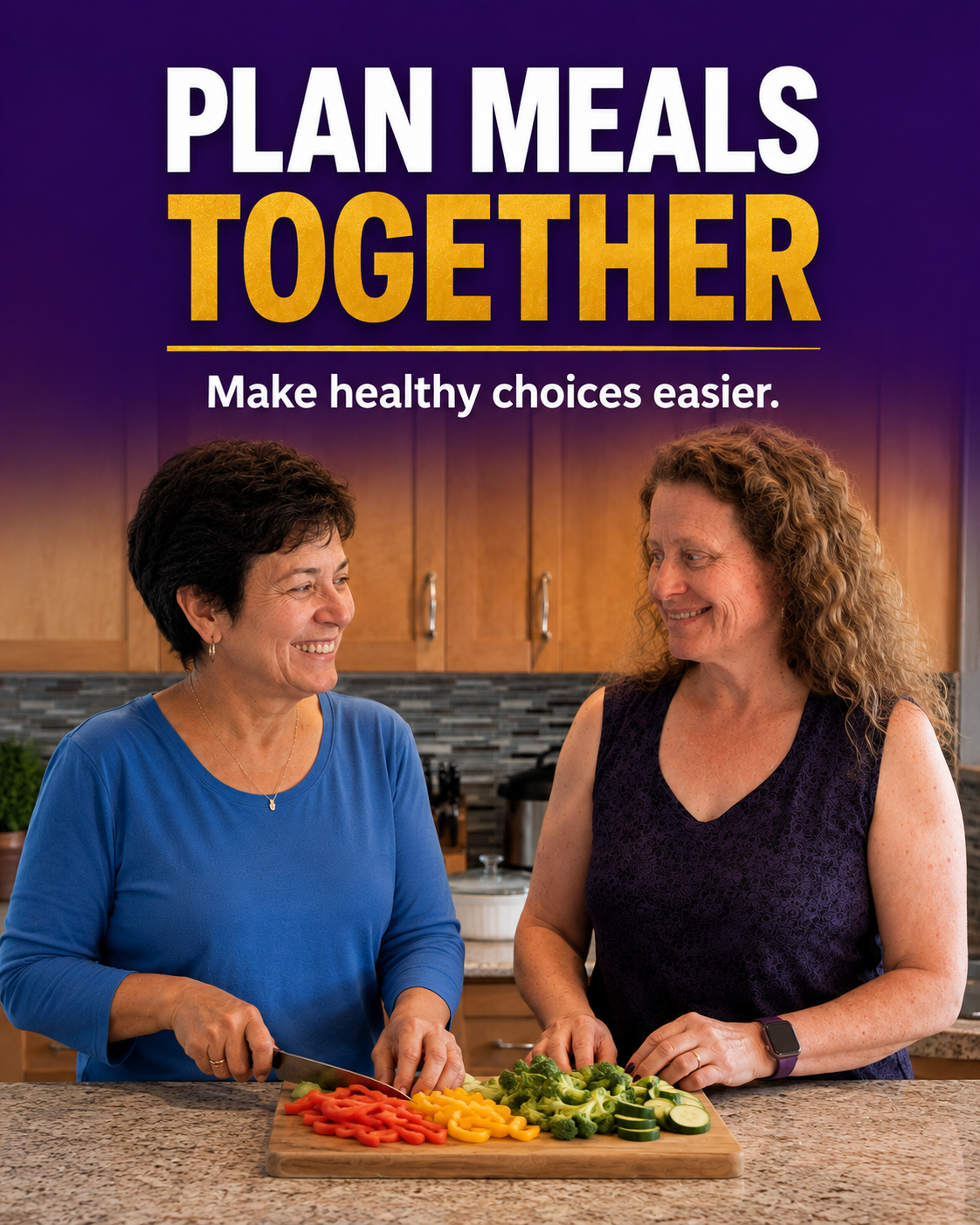
Whenever possible, invite the people in your household to help plan the week’s meals.
Ask everyone to suggest a meal they enjoy. Then look for simple ways to create balance by including:
A source of protein
Vegetables or fruit
A fibre-rich carbohydrate
A healthy fat
You don’t need a perfect menu, and everyone at the table doesn’t need an identical plate.
Planning together reduces last-minute decisions and helps healthy food feel like part of ordinary family life—not a temporary diet you must follow alone.
4. Create a Supportive Food Environment
Your surroundings influence your choices more than you may realize.
If nourishing options are difficult to find or require a lot of preparation, you’ll need to rely on willpower every time you’re hungry or tired.
Make supportive choices easier by keeping simple options visible and accessible.
You might:
Wash and cut vegetables ahead of time
Keep cooked protein ready for quick meals
Place fruit where you’ll see it
Fill your water bottle in the morning
Keep easy meal ingredients available
Portion leftovers into containers for lunch
You can also ask the people you live with to help keep shared spaces supportive.
This doesn’t mean banning anyone’s favourite foods. It means creating enough room and visibility for the foods and drinks that help you feel your best.
5. Ask for Encouragement—Not Food Policing
Support should never sound like:
“Are you allowed to eat that?”
“I thought you were trying to lose weight.”
“Should you be having seconds?”
Comments like these can create shame, guilt and defensiveness. They can also make it harder to develop a peaceful relationship with food.
Tell the people supporting you what would actually be helpful.
You might ask them to:
Celebrate your consistency
Prepare a meal with you
Join you for a walk
Listen when you’ve had a challenging day
Avoid commenting on your plate or body
Remind you of the progress you have already made
You are still the person making your own food decisions. Good support respects your choices and your autonomy.
6. Seek Professional Support When You Feel Stuck
Friends and family can provide encouragement, but sometimes you need someone who can help you look more deeply at your habits and patterns.
You might know what to eat but still struggle with emotional eating, all-or-nothing thinking, stress, inconsistent routines or repeatedly starting over.
A coach can help you identify what is getting in the way, develop practical strategies and build accountability without shame.
Seeking professional support doesn’t mean you have failed. It means you are ready to stop trying to solve everything alone.
The right support should help you become more confident in your own decisions—not dependent on someone else to make them for you.
7. Celebrate Consistency Together
Don’t wait until you reach a specific weight or clothing size to acknowledge your progress.
Celebrate the small actions that are helping you create a healthier lifestyle.
That might include:
Preparing breakfast before a busy morning
Choosing a balanced meal that satisfied you
Drinking more water
Planning ahead for a challenging week
Returning to your routine after an interruption
Asking for help instead of giving up
These choices may not feel dramatic, but they are the actions that create lasting change.
When you celebrate consistency, you reinforce the behaviours you want to repeat.
You Don’t Have to Do It Alone
Healthy eating isn’t only about knowing what to eat. It’s also about creating relationships, routines and an environment that make supportive choices easier to repeat.
You don’t need someone watching or judging everything you eat. You need encouragement, practical assistance and accountability that helps you keep moving forward.
Consider which of these seven forms of support would make the biggest difference for you right now.
Then take one small step. Tell someone about your goal, plan a meal together, prepare one ingredient in advance or reach out for the guidance you need.
Small, consistent changes create lasting transformation.
Ready for Your Next Step?
My free 5-Step Strategy Starter Kit will help you explore five important areas of sustainable wellness:
Your relationship with food
The psychology of weight loss
Creating an active lifestyle
Managing stress
Accountability and support
Download the free 5-Step Strategy Starter Kit and begin creating a healthier approach that fits your real life.