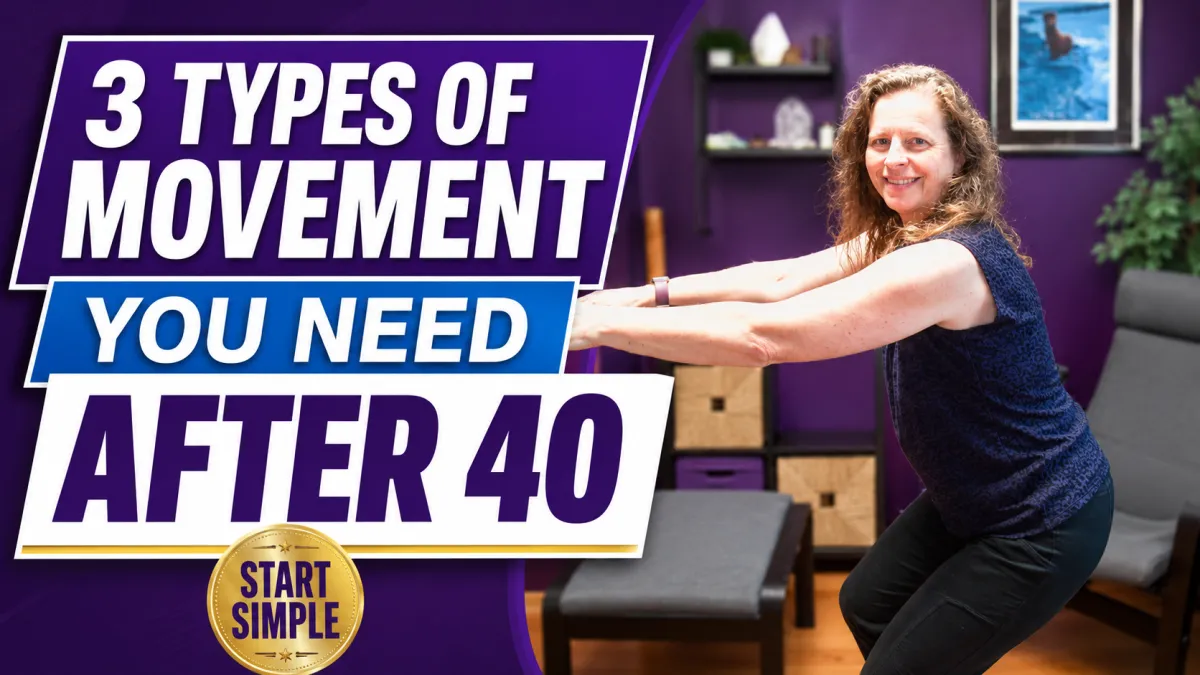
Exercise After 40: 3 Types of Movement Women Need
Exercise After 40: 3 Types of Movement Every Woman Needs
You don’t need to spend hours at the gym to stay strong, active and healthy after 40—but you do need more than one type of movement.
Many women rely primarily on walking. Others believe exercise only counts if it is long, intense or leaves them feeling exhausted.
Walking is wonderful, but creating a well-rounded active lifestyle after 40 also means including movement that supports your muscles, mobility and balance.
The good news is that you don’t need a complicated workout schedule. Small amounts of the right types of movement can make a meaningful difference when practised consistently.
Why Movement Becomes Especially Important After 40
As we get older, maintaining muscle, strength, balance and mobility becomes increasingly important.
Regular movement can support your:
Energy and mood
Strength and muscle maintenance
Balance and coordination
Flexibility and mobility
Metabolic health
Ability to complete everyday activities
Long-term independence
Movement is not simply about burning calories or changing the number on the scale. It is one of the ways we care for our bodies and protect our ability to continue doing the things we love.
Watch: Three Types of Movement You Need After 40
In this week’s video, I explain the three types of movement women should consider after 40—and how you can begin without long or exhausting workouts.
Let’s look more closely at each type of movement.
1. Everyday Activity
Everyday activity includes all the movement you do outside of a formal workout.
This might include:
Walking after a meal
Gardening
Carrying groceries
Taking the stairs
Vacuuming
Walking while talking on the phone
Dancing to your favourite song
Moving during television commercials
These activities may seem small, but they help reduce the amount of time you spend sitting and keep your body moving throughout the day.
You don’t necessarily need to find an extra hour in your schedule. Look for opportunities to add five or 10 minutes of movement to the routines you already have.
A short walk after dinner, a few stretches while waiting for the kettle or an energetic round of housework all count.
2. Strength-Building Movement
Maintaining muscle becomes increasingly important as we age.
Muscle supports your metabolism, posture, balance and ability to manage everyday activities such as carrying groceries, climbing stairs and getting up from a chair.
Strength training doesn’t have to mean lifting heavy weights in a gym. Beginners can start with simple movements such as:
Chair squats
Wall push-ups
Resistance-band exercises
Heel raises
Light dumbbells
Sit-to-stands
Start with what feels comfortable and appropriate for your body. Focus on learning the movements and gradually building your confidence.
A few simple strength exercises performed consistently can be more valuable than an intense routine you dread and eventually abandon.
3. Mobility and Balance
Mobility allows your joints to move comfortably through their natural range of motion. Balance helps you feel more stable and confident when walking, turning, reaching and completing everyday tasks.
Simple mobility and balance activities include:
Morning stretches
Shoulder rolls
Hip circles
Gentle yoga
Stretching before bed
Practising balance beside a sturdy chair or counter
These exercises may not feel as impressive as an intense workout, but they play an important role in helping you remain comfortable, capable and independent.
Always use a stable support when practising balance, and choose movements that are appropriate for your abilities.
Which Type of Exercise Is Best After 40?
The best approach combines all three:
Everyday activity helps you move more and sit less.
Strength-building movement helps preserve muscle and supports your ability to complete daily activities.
Mobility and balance exercises help you move more comfortably and confidently.
You don’t have to do all three every day, and you don’t need to create a perfect exercise schedule overnight.
Choose one place to begin.
You might take a 10-minute walk today, do a few chair squats tomorrow and spend five minutes stretching before bed.
Movement Should Support You—not Punish You
For many women, exercise has become connected to guilt, food and punishment.
You may have been taught that you need to “work off” something you ate or push your body until you are exhausted for your efforts to count.
Movement does not need to be a punishment.
It can be something you do because you want more energy, greater confidence and the freedom to keep participating in the life you enjoy.
Instead of asking, “Did I exercise enough?” try asking:
What kind of movement would support me today?
Some days, the answer might be a brisk walk. On other days, gentle stretching or a few strength exercises may be exactly what your body needs.
Start With Just 10 Minutes
Consistency matters more than creating a perfect routine.
Choose one activity and aim for 10 minutes. You can complete those 10 minutes at once or divide them into smaller periods throughout your day.
If 10 minutes feels like too much right now, begin with five.
The important thing is to start where you are, choose movement you enjoy and gradually build from there.
Download the Free Move Made Simple Guide
Would you like some help getting started?
My free Move Made Simple guide includes:
A simple 10-minute movement formula
25 easy ways to move more
Gentle strength and mobility ideas
A seven-day movement-planning sheet
Practical suggestions created for women over 40
GET YOUR FREE MOVE MADE SIMPLE GUIDE
You don’t have to completely transform your routine today. Choose one small action and let it become the beginning of something lasting.
Remember…
Small, consistent changes create lasting transformation.


