
Afternoon Slump After 40? Start With an Easier Lunch Routine
You reach the middle of the afternoon and realize lunch never really happened. There was a meeting, an errand, a phone call—and a few bites of something while you stood at the counter.
If this sounds familiar, you have a useful place to begin: make lunch easier to remember and easier to put together.
Energy is affected by more than food. Sleep, stress, health conditions and medications can all matter. A lunch routine won’t explain or solve every afternoon slump. But it can help you make space for nourishing yourself in a busy day.
For women over 40 working toward sustainable weight wellness, that routine can be flexible, familiar and manageable.

1. Choose a default lunch you actually enjoy
A default lunch is a meal you can repeat when you don’t want to make another decision. It doesn’t mean you must eat the same thing forever. It gives you one reliable option.
Begin with foods you like and can keep available. Include a protein food, vegetables or fruit, and a whole-grain food; add a fat, sauce or dressing you enjoy. Adjust portions to your appetite and needs.
Canada’s Food Guide encourages variety across vegetables and fruits, whole grains and protein foods. Its plate is a flexible planning tool, including for meals served in bowls or mixed dishes.
Here are a few starting points:
Chicken, vegetables and a whole-grain wrap.
Lentils, brown rice and frozen vegetables with an olive-oil dressing.
Eggs, whole-grain toast and tomatoes or fruit.
Leftover salmon, potatoes and a salad.
Use what suits your preferences, budget and dietary needs. You can change the ingredients while keeping the same simple structure.
The question is: “What meal could I put together without a lot of extra thought?”
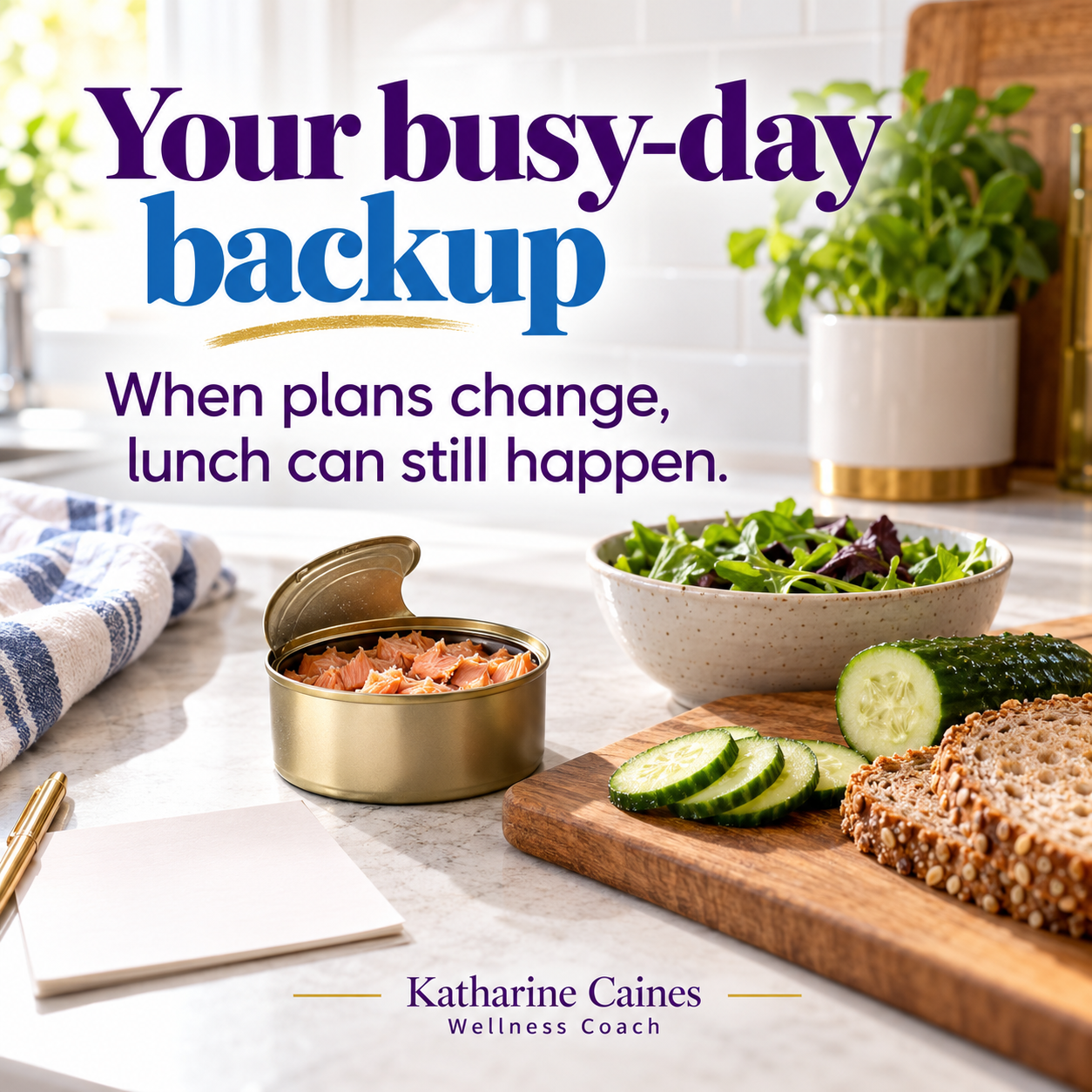
2. Keep a backup for the day your plan changes
Even a useful plan needs a backup. Someone eats your leftovers. An appointment runs late. You get home and discover you’re missing an ingredient.
Choose one meal that works when those things happen.
For example, keep canned salmon, whole-grain bread and an easy vegetable available. Or keep eggs and a few familiar sides. A frozen meal you enjoy with a convenient vegetable side can also be an option.
Convenience can help you follow through. Frozen vegetables, pre-cut produce and leftovers all have a place in an everyday routine.
Write your backup on a note:
“When there are no leftovers, I can make ______.”
Then check that its ingredients are actually in the cupboard, fridge or freezer. A backup you can see and use is more helpful than one you have to remember under pressure.
3. Give lunch a moment in your schedule
If caring for everyone else pushes your meal out of the day, try a reminder that asks: “Have I given myself time to eat?”
Choose a time that fits your routine. Shift workers, caregivers and people with unpredictable schedules may need different prompts. You could connect it to the end of a meeting, a break between errands or another event that already happens.
Treat the reminder as a check-in. Notice your hunger and what the rest of your day looks like. If you’re running late, adjust the plan.
When you can, sit down for your meal. Notice whether it feels satisfying. You might need a different amount, another food or a snack later. These observations help you learn what works for you.
You don’t need to grade your eating. You’re building a routine you can use.
Try a three-day lunch experiment
For the next three days:
Choose one default lunch.
Write down one backup and keep its ingredients handy.
Set a gentle reminder to check what you need.
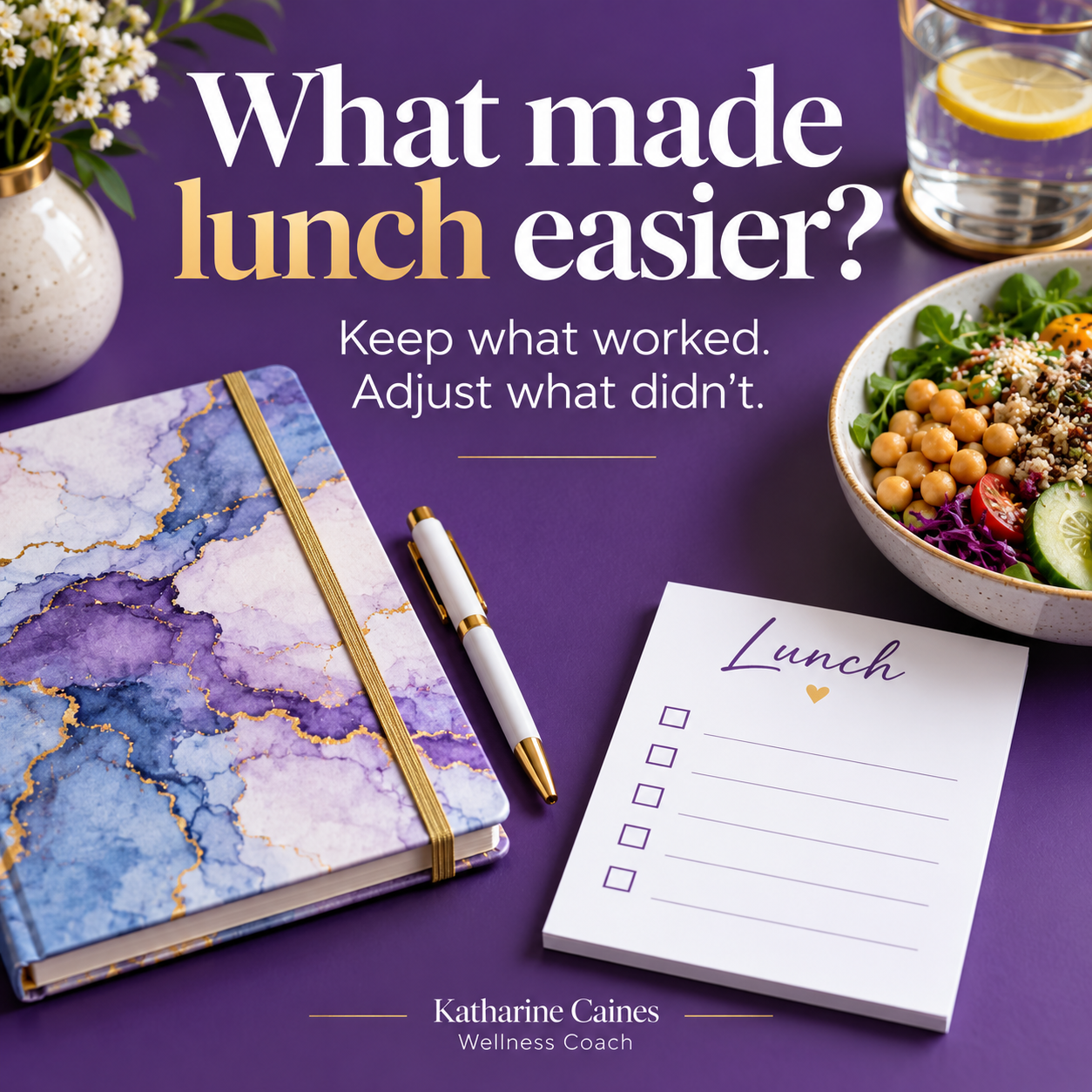
At the end of each day, ask:
Was lunch easier to put together?
Did I make enough time for it?
Did the meal feel satisfying?
What could make tomorrow easier?
You may find that repeating a familiar meal helps. You may prefer two options. You may discover that your reminder needs to be earlier. Each answer is useful information.
Make one adjustment, then try again.
A small preparation step can help
You don’t need a whole afternoon of meal preparation. Choose one task that removes friction from tomorrow:
Put leftovers into a lunch container when you clear dinner.
Wash a few vegetables.
Move your backup ingredients to an easy-to-see shelf.
Write tomorrow’s lunch on your grocery note.
Keep the task small enough that it works on an ordinary week. A routine that depends on a perfect Sunday is difficult to maintain when life changes.
What if you’re still exhausted?
Persistent, new or disruptive fatigue deserves a conversation with a healthcare professional. Don’t assume it is simply age, a lack of willpower or a lunch problem.
Your observations about meals, sleep and daily routines may help you describe what you’re experiencing, but they don’t replace an assessment.
Build a routine that fits your life
In Holistic Weight Wellness, we work on the relationship with food alongside mindset, movement, stress management and supportive accountability. We look at your real schedule and choose manageable habits you can practise and adapt.
If you’d like to explore support, book a discovery call. We can talk about your goals and whether the program is a good fit, with no pressure.
Watch this week’s video: Watch The Gentle Lunch Routine on YouTube
What’s one lunch you could keep on repeat this week?
Small, consistent changes create lasting transformation.
Katharine Caines, Wellness Coach
Further reading: Canada’s Food Guide: making healthy meals with the food guide plate


